
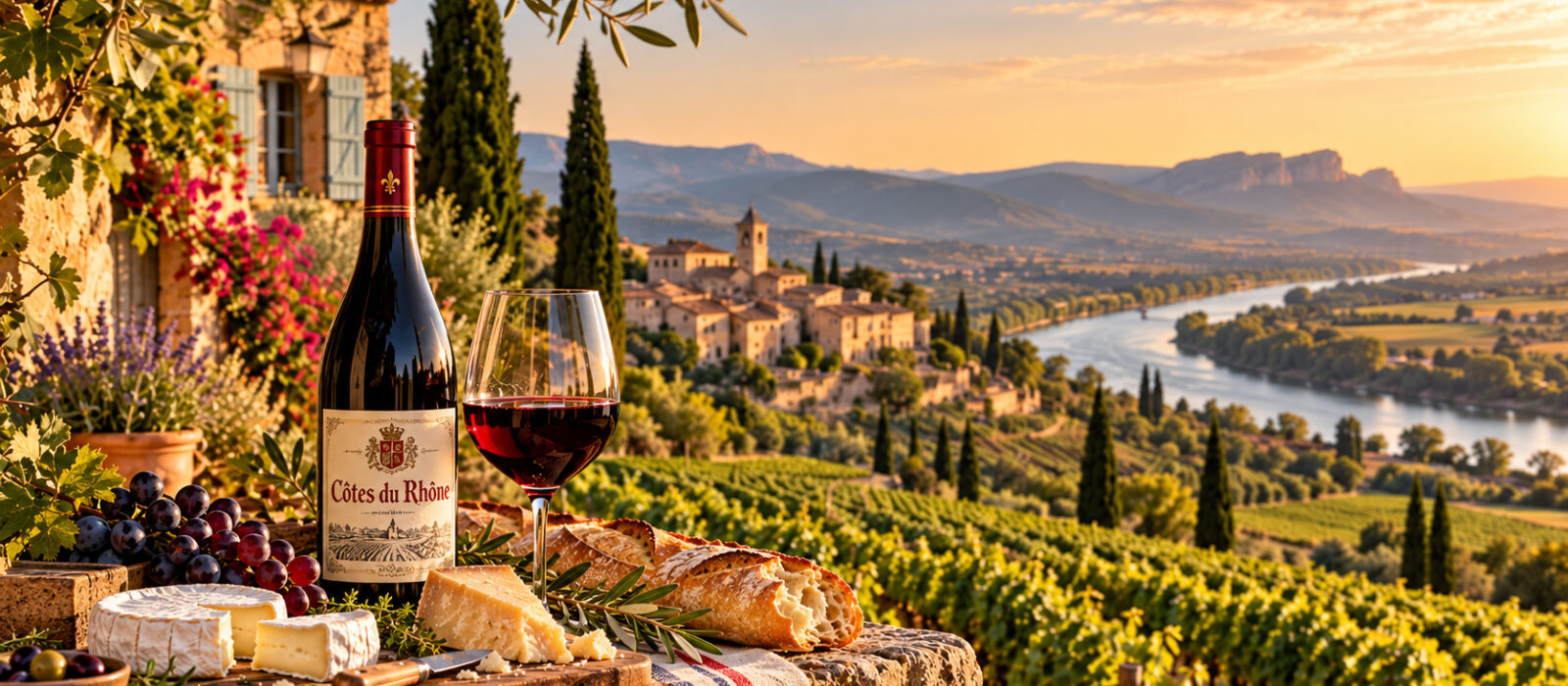
Côtes du Rhône is one of the most recognisable names in French wine. Produced along the Rhône Valley in south-eastern France, these wines range from easy-drinking, fruit-forward bottles designed for everyday meals to complex, age-worthy wines from some of the country’s most celebrated vineyards.
The phrase “Côtes du Rhône” literally refers to the slopes or hills of the Rhône, reflecting the close relationship between the vineyards and the river that runs through the region. The Rhône has played an important role in the development of local wine for centuries, providing both fertile surroundings and an important historic transport route.
Today, the wider Rhône Valley is admired for its diversity. Red wine dominates production, although excellent whites and rosés are also made. Depending on where the wine comes from, a Rhône bottle might be generous and spicy, floral and elegant, deeply structured or wonderfully fresh.
A Wine Region With Ancient Roots
Wine has been produced in the Rhône Valley for a remarkably long time. Viticulture in southern France developed through the influence of ancient Mediterranean settlers and expanded significantly during Roman rule.
The Rhône River helped connect inland vineyards with important centres of trade. Wine could be transported through the valley towards Mediterranean ports, allowing local production to reach a much wider market.
Evidence of Roman civilisation remains visible throughout the region today. Towns such as Vienne, for example, retain important Roman monuments and archaeological sites. The area around Vienne is also closely associated with some of the northern Rhône’s famous vineyards.
Two of the most historic wine areas in the valley are Côte-Rôtie and Hermitage. Both are known for dramatic vineyard landscapes and wines capable of considerable ageing.
During the Middle Ages, religious communities became increasingly involved in vineyard ownership and wine production. Monasteries and church institutions helped cultivate vines and improve winemaking practices across many parts of France.
One of the Rhône Valley’s most famous historical associations can be found at Châteauneuf-du-Pape. The name means “the Pope’s new castle” and reflects the presence of the Avignon papacy during the 14th century. The area subsequently became one of the best-known wine-producing villages in the southern Rhône.
Northern and Southern Rhône
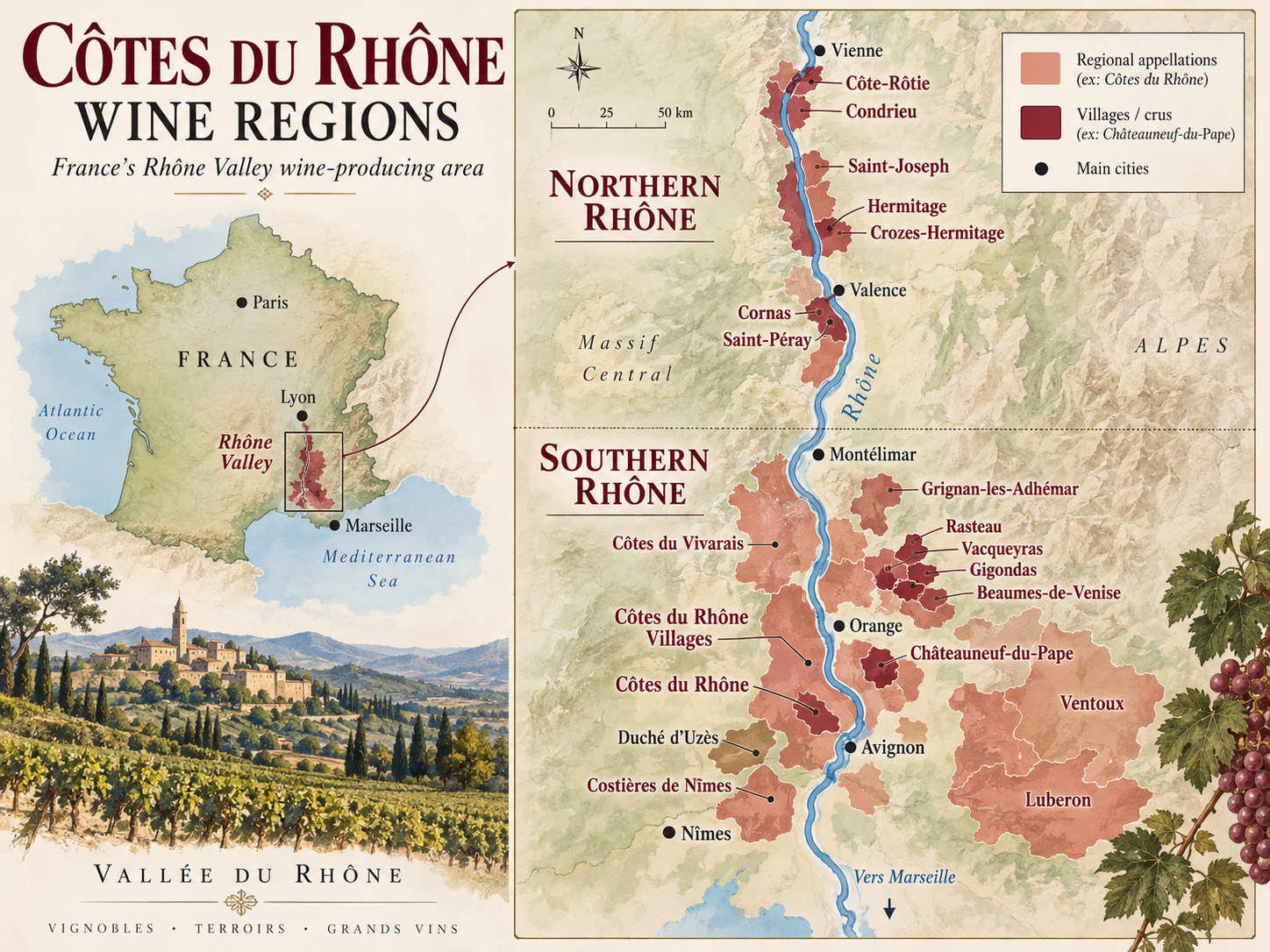
Although the Rhône Valley is often discussed as a single wine region, it is helpful to divide it into two broad sections: the Northern Rhône and the Southern Rhône.
The Northern Rhône is narrower and often characterised by steep hillsides. Syrah is the principal red grape here, producing wines that can combine dark fruit with pepper, herbs, smoke and savoury notes.
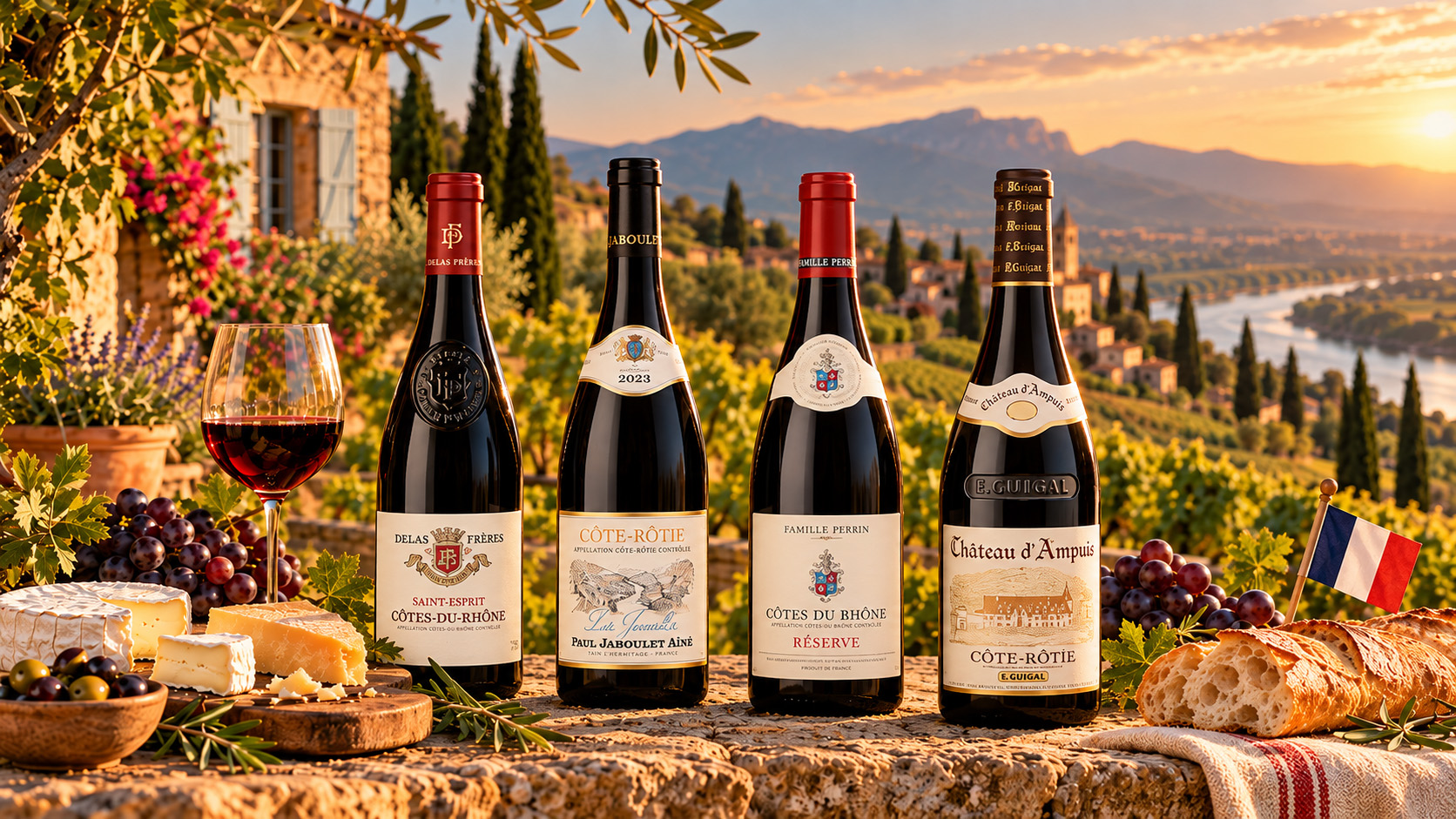
Famous northern appellations include Côte-Rôtie, Hermitage, Crozes-Hermitage, Cornas and Saint-Joseph.
White wines are also important in the northern valley. Viognier reaches its most celebrated expression in Condrieu, while Marsanne and Roussanne are important in other appellations.
The Southern Rhône is warmer, broader and considerably larger in terms of production. Rather than relying primarily on one red grape, southern Rhône wines are frequently blends.
Grenache is particularly important, commonly joined by Syrah, Mourvèdre, Cinsault and other permitted varieties. These combinations can create generous wines with flavours of ripe berries, plums, herbs, spices and pepper.
Châteauneuf-du-Pape, Gigondas and Vacqueyras are among the best-known names of the Southern Rhône.
What Does Côtes du Rhône Taste Like?
There is no single flavour that defines every Côtes du Rhône wine because styles vary according to grape varieties, vineyard location, vintage and winemaking.
A typical red Côtes du Rhône, however, is likely to be medium to full in body with plenty of ripe fruit.
Cherry, blackberry, raspberry and plum flavours are common. Many wines also display attractive savoury notes such as black pepper, dried herbs, liquorice, earth or warming spice.
The warm southern climate helps grapes achieve good levels of ripeness, giving many wines a rounded and generous character.
Syrah can contribute darker fruit, pepper and structure, while Grenache often brings ripe red fruit, warmth and softness. Mourvèdre may provide deeper colour, tannin and savoury complexity.
The result is often a wine that is approachable without being simple.
Good Côtes du Rhône can offer considerable character for its price, which is one reason the appellation remains popular with both casual wine drinkers and enthusiasts.
Côte-Rôtie
Among the Rhône Valley’s most prestigious wines is Côte-Rôtie.
Its name translates roughly as “roasted slope”, an appropriate description for vineyards planted on steep, sun-exposed hillsides overlooking the Rhône near the town of Ampuis.
Syrah is the dominant grape.
The wines can be intensely aromatic and structured, combining dark fruit with pepper, smoke, flowers and savoury notes. When young, serious examples may feel firm or tightly wound. With bottle age, they can develop considerable complexity and a softer texture.
A small proportion of the white Viognier grape may traditionally be used alongside Syrah in Côte-Rôtie. When employed carefully, Viognier can contribute perfume and aromatic lift.
Historical discussions of Côte-Rôtie sometimes distinguish between the Côte Brune and Côte Blonde, two sections traditionally associated with slightly different soils and wine styles. Although individual producers and vineyards vary considerably, the distinction remains part of the cultural identity of the appellation.
Châteauneuf-du-Pape
Farther south lies Châteauneuf-du-Pape, probably one of the most famous names in Rhône wine.
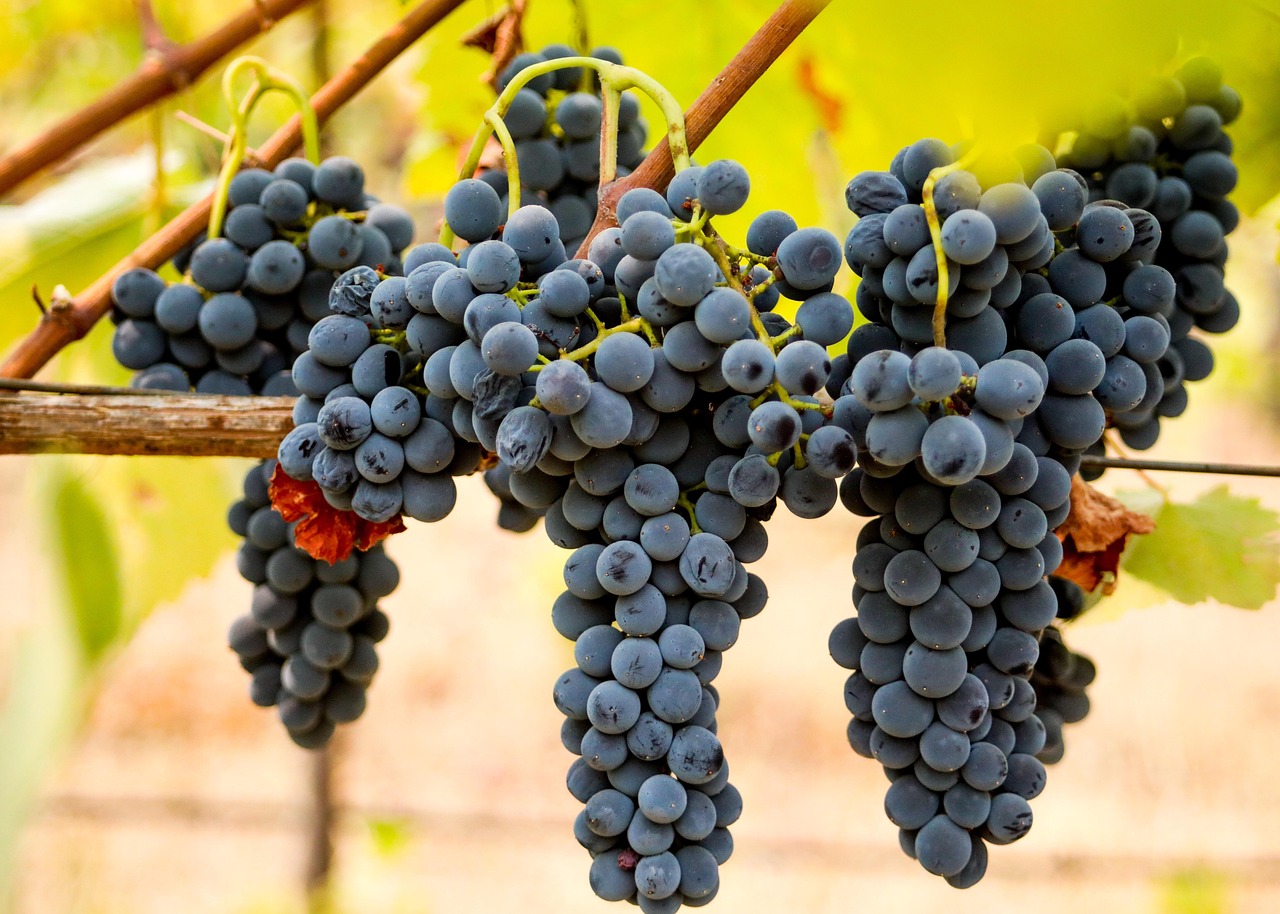
The appellation is known particularly for powerful red blends, often based on Grenache. Depending on the producer, wines can contain several additional grape varieties.
Warm sunshine allows the grapes to ripen fully, resulting in generous flavours that may include raspberry, blackberry, plum, herbs, pepper, liquorice and spice.
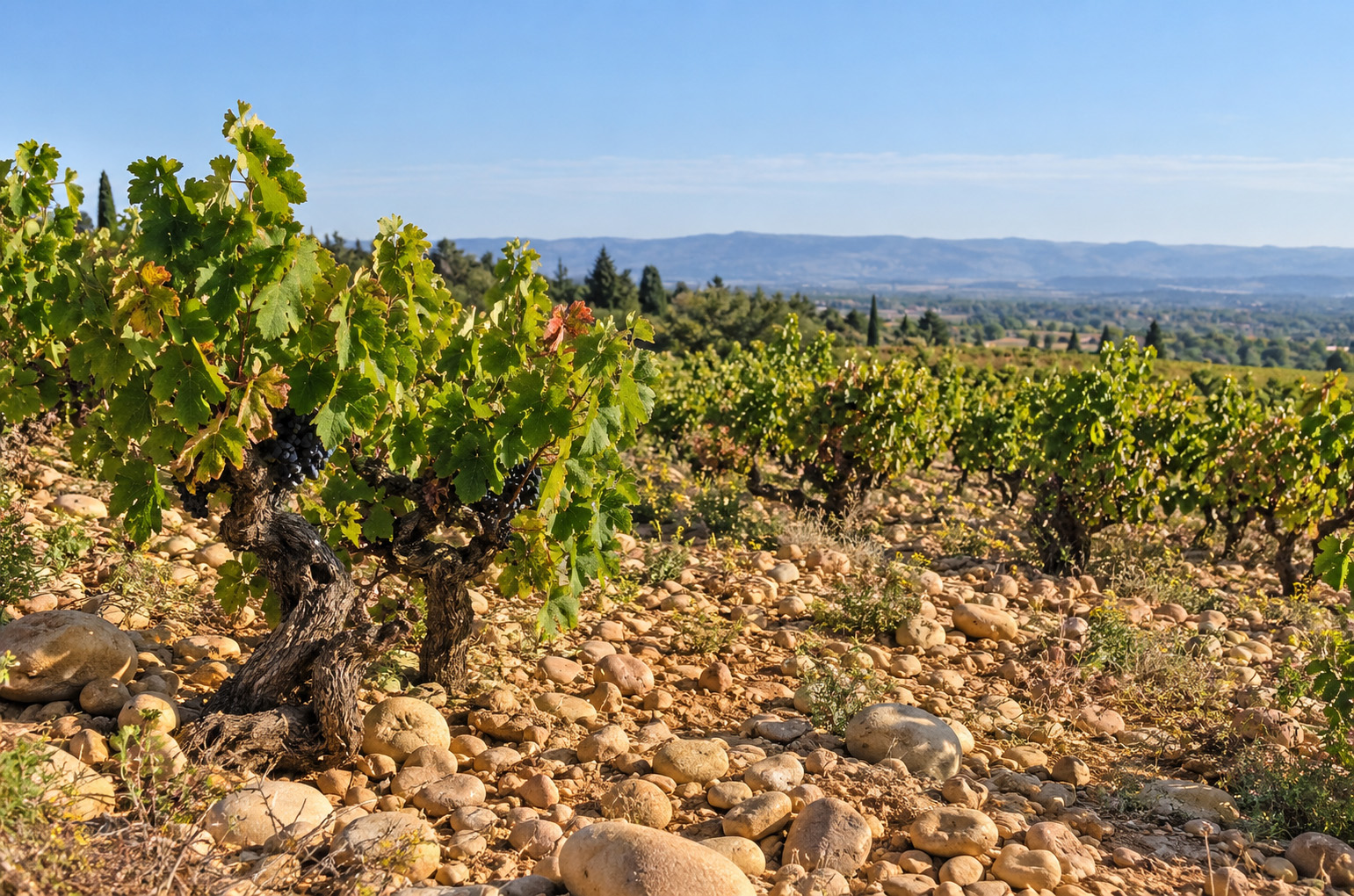
The landscape itself is distinctive. Some vineyards are covered with large rounded stones known as galets roulés. These stones are closely associated with the visual identity of Châteauneuf-du-Pape.
The best examples can develop beautifully in bottle, gaining more savoury and earthy complexity with age.
White and Rosé Rhône Wines
Although red wine receives most of the attention, the Rhône Valley also produces worthwhile white and rosé wines.
White Côtes du Rhône may be made from varieties such as Viognier, Grenache Blanc, Marsanne, Roussanne and Clairette.
Styles range from fresh and floral to richer, more textured wines. Depending on the blend, flavours might include peach, apricot, pear, citrus, flowers and gentle spice.
Rhône rosés are generally intended to be enjoyed relatively young, when their fresh fruit and refreshing character are most expressive.
These wines can be particularly enjoyable alongside Mediterranean dishes, salads, grilled vegetables and lighter summer meals.
What Food Goes With Côtes du Rhône?
Food friendliness is one of the great strengths of Rhône wine.
Red Côtes du Rhône works particularly well with roasted and grilled meats. Lamb is a classic match, especially when seasoned with rosemary, garlic or thyme.
Beef stews, sausages, roast pork and game can also pair successfully with richer examples.
The herbal qualities found in many southern Rhône reds make them especially suitable for Mediterranean cooking. Dishes featuring aubergine, tomatoes, olives, peppers and Provençal herbs often complement the wines naturally.
Cheese is another dependable pairing. Mature hard cheeses, rustic farmhouse varieties and moderately strong washed-rind cheeses can all work well.
Vegetarian dishes should not be overlooked. Lentil stews, mushroom dishes, grilled aubergine and recipes based around beans or roasted root vegetables can have enough savoury depth to stand alongside a medium-bodied Rhône red.
White Rhône wines are flexible at the table as well. They can accompany roast chicken, creamy seafood dishes, grilled fish, vegetable gratins and mildly spiced food.
Should Côtes du Rhône Be Aged?
Ageing potential depends greatly on the specific wine.
Many bottles labelled simply Côtes du Rhône are produced for relatively early drinking. Their appeal comes from fresh fruit, soft texture and immediate accessibility rather than long-term cellaring.
More structured Côtes du Rhône Villages wines may develop for several years.
Prestigious appellations can have considerably greater ageing potential. Serious Côte-Rôtie, Hermitage and Châteauneuf-du-Pape wines can evolve over many years when produced in a strong vintage and stored under suitable conditions.
As these wines mature, fresh fruit flavours may gradually give way to more complex notes of leather, dried herbs, earth, tobacco, spice and dried fruit.
However, expensive Rhône wine does not automatically require ageing. Many modern examples provide considerable pleasure while relatively young.
Understanding Côtes du Rhône Labels
The Rhône appellation system can initially seem complicated, but a few basic categories make it easier to understand.
Côtes du Rhône is the broad regional appellation and includes wines produced across a large geographical area.
Côtes du Rhône Villages represents a more restricted category with tighter production requirements. Certain villages are permitted to place their individual village names on the label.
Beyond these are individual appellations such as Gigondas, Vacqueyras, Châteauneuf-du-Pape, Hermitage and Côte-Rôtie.
As a general principle, a more specific geographical designation usually indicates more narrowly defined production rules and vineyard origins, although the producer and vintage remain extremely important when judging an individual bottle.
Why Côtes du Rhône Remains So Popular
One of the attractions of Rhône wine is the extraordinary range available.
Someone looking for an affordable bottle for a midweek dinner can find straightforward Côtes du Rhône reds offering plenty of ripe fruit and spice.
At the same time, collectors can explore some of France’s most sought-after wines from appellations such as Hermitage, Côte-Rôtie and Châteauneuf-du-Pape.
The region also provides enormous stylistic variety. Lovers of bold reds, elegant Syrah, aromatic whites, refreshing rosés and complex blended wines can all find something of interest.
Perhaps most importantly, Rhône wines tend to work extremely well with food. Their combination of fruit, spice, savoury character and moderate acidity makes them suitable for dishes ranging from simple grilled sausages to slow-cooked lamb and elaborate game dishes.
From ancient vineyards and Roman history to medieval monasteries and internationally famous appellations, the Rhône Valley has a wine culture shaped over many centuries.
Whether you begin with an accessible Côtes du Rhône or explore prestigious names such as Côte-Rôtie, Hermitage, Gigondas or Châteauneuf-du-Pape, the region offers one of the most rewarding introductions to French wine.