
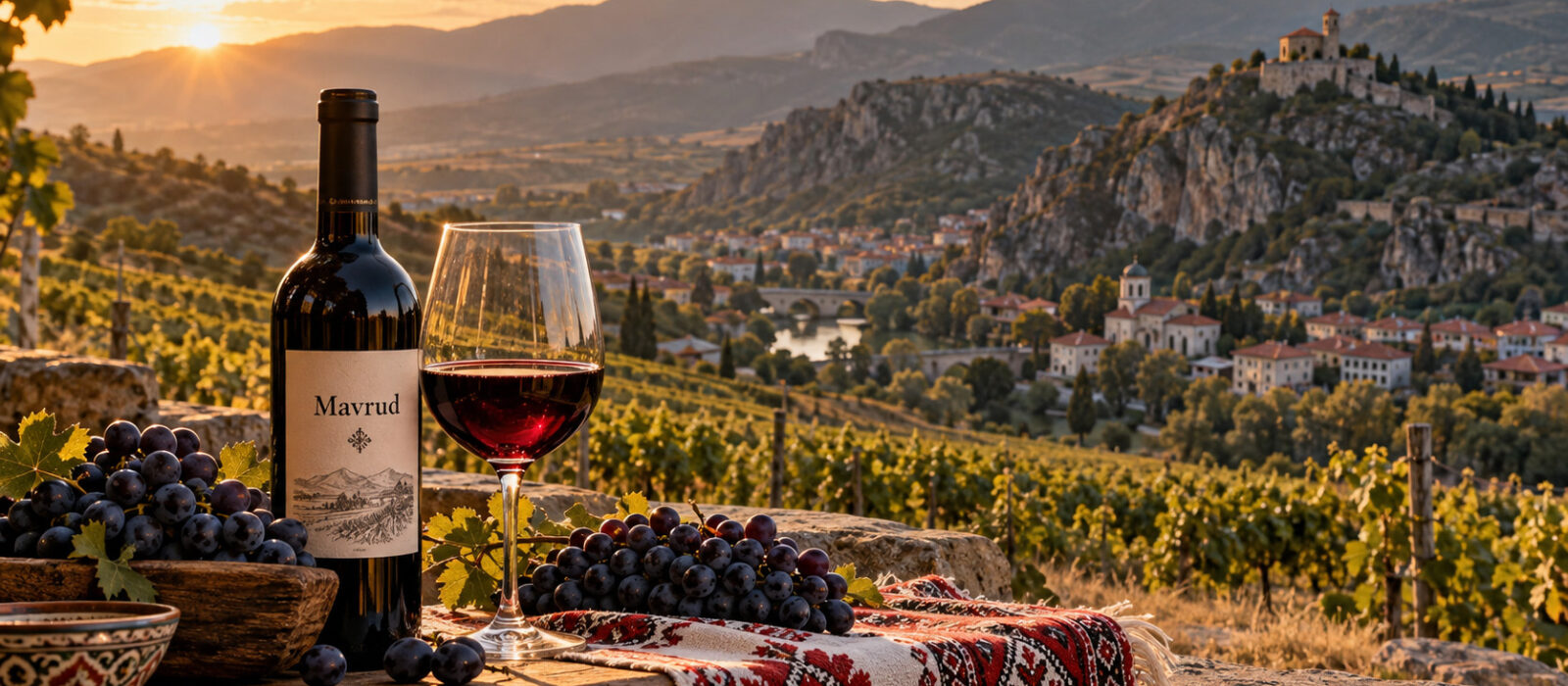
Few grape varieties tell the story of Bulgaria quite like Mavrud. Deeply connected with the country’s winemaking traditions, particularly those of Thrace and the area around Asenovgrad, Mavrud is one of Bulgaria’s most distinctive indigenous red grapes.
Dark in colour, characterful and naturally high in acidity and tannin, it can produce wines ranging from vibrant and fruit-driven to complex, oak-aged reds capable of developing beautifully with time.
But Mavrud is more than simply a grape variety. Its history is wrapped in ancient winemaking traditions, regional pride and one of Bulgaria’s best-known wine legends.
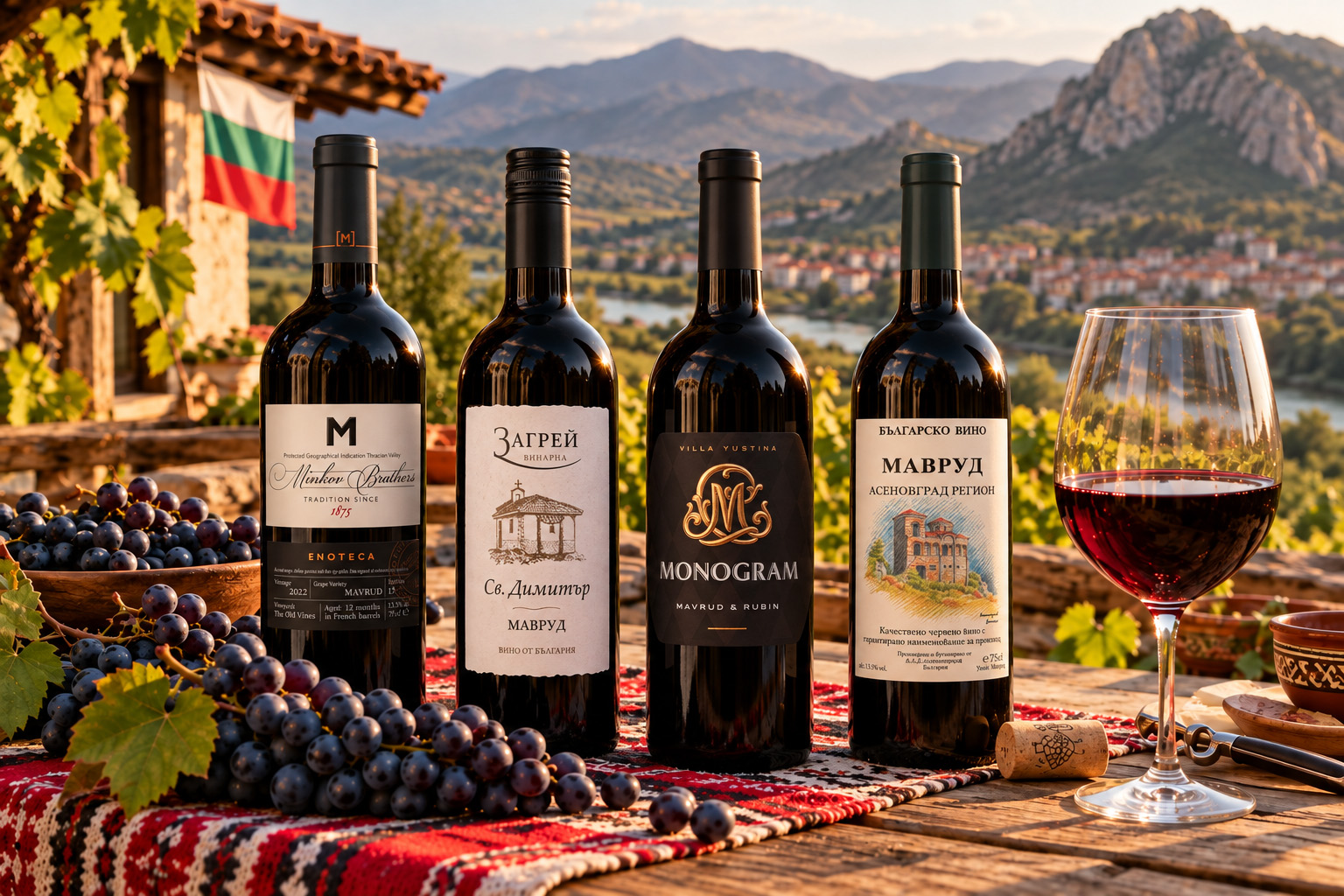
A Grape with Deep Bulgarian Roots
Viticulture has been part of life in the lands of modern Bulgaria since antiquity. The ancient Thracians cultivated grapes and placed wine at the centre of religious ceremonies, celebrations and everyday culture.
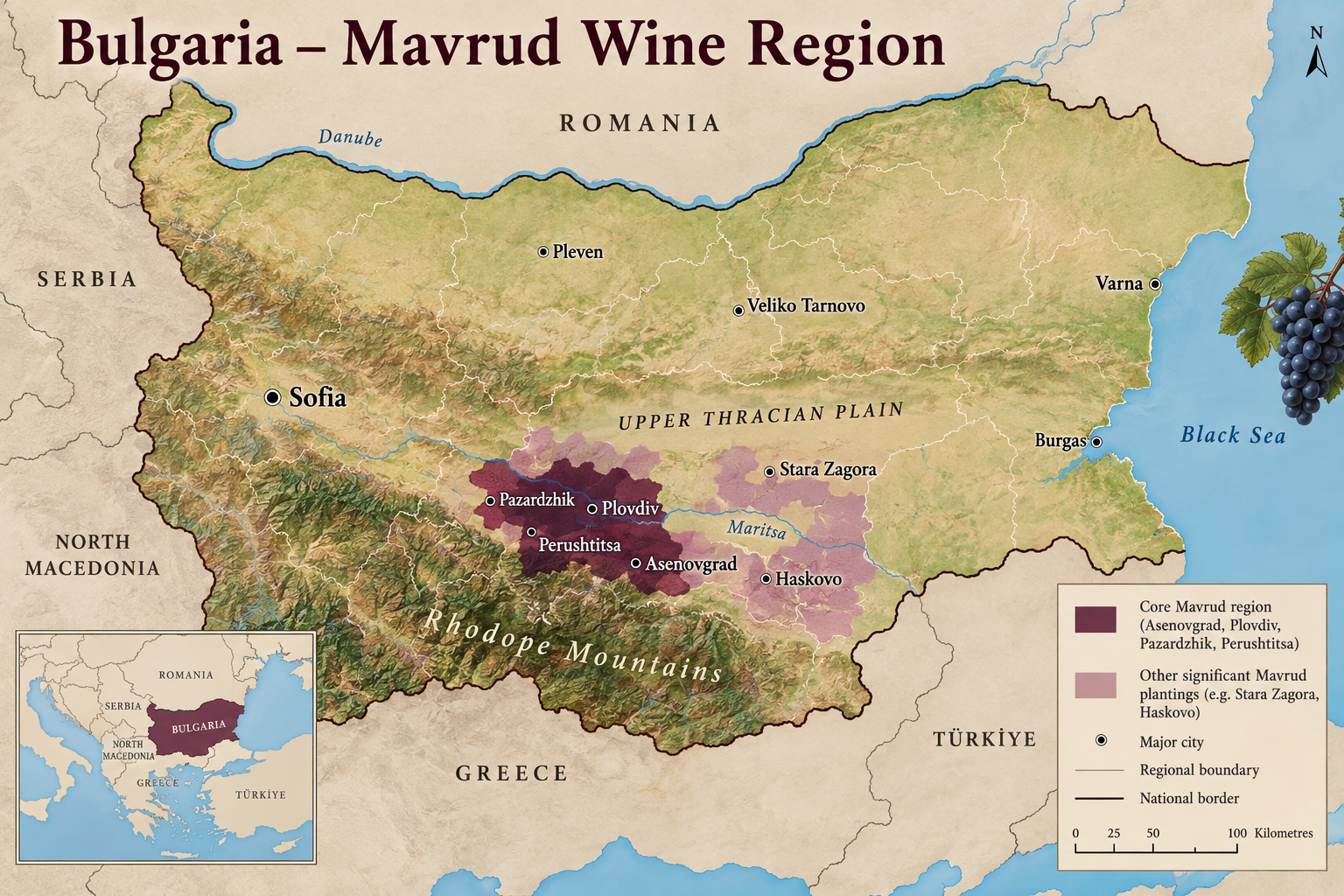
The region surrounding Asenovgrad, close to the northern slopes of the Rhodope Mountains, has an especially long association with viticulture. Archaeological evidence and historical accounts point to the wider Thracian region as an important centre of grape growing and wine production.
Mavrud became particularly associated with Asenovgrad and nearby Perushtitsa, although the variety has also traditionally been grown in areas around Pazardzhik, Chirpan and Stara Zagora.
Today, it remains one of the varieties most strongly associated with Bulgarian wine.
The Legend of Mavrud
No story about Mavrud would be complete without the legend from which the grape supposedly takes its name.
The tale is traditionally set during the reign of Khan Krum, ruler of Bulgaria in the early ninth century.
According to one version of the legend, Khan Krum ordered vines to be destroyed in an attempt to prevent drunkenness among his people and soldiers.
One woman, however, secretly kept a vine and continued making wine.
Her son, Mavrud, grew into an exceptionally strong and courageous young man. In different versions of the story, he defeats either a fearsome lion or a mythical Bulgarian creature known as a lamya.
Impressed by the young man’s bravery, Khan Krum asked his mother how her son had become so strong. She revealed that she had secretly continued producing wine and had given it to him.
The ruler reconsidered his decision, permitted vines to be planted again, and, according to the legend, the grape became known as Mavrud in honour of the courageous young man.
It is a wonderful story, although it should be enjoyed as folklore rather than documented history. Several versions have developed over the centuries, reflecting the importance of wine and grape growing within Bulgarian cultural tradition.
What Is Mavrud?
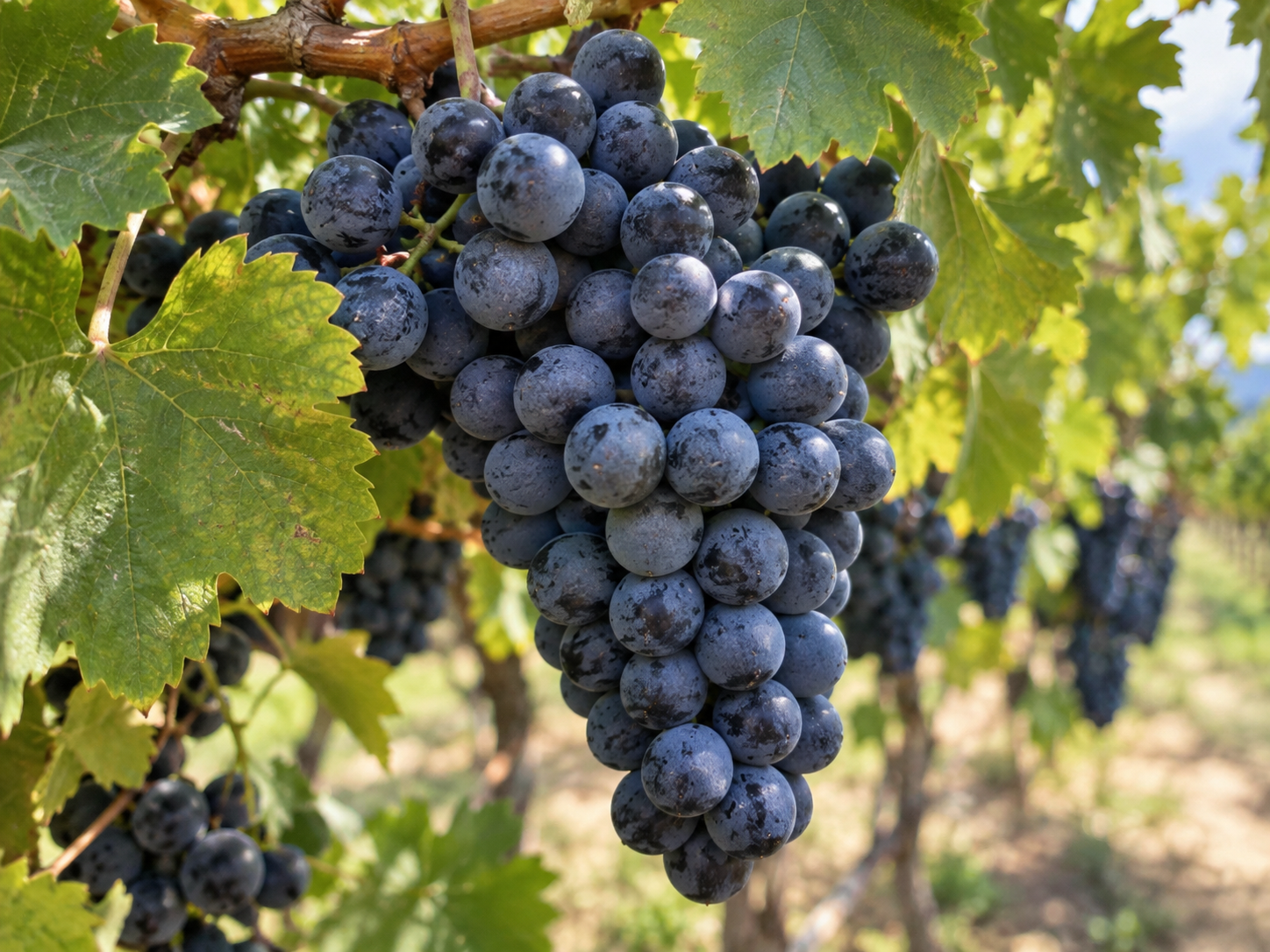
Mavrud is a dark-skinned red wine grape traditionally grown in Bulgaria.
It is generally considered a late-ripening variety, meaning that it needs a relatively long and warm growing season to reach full maturity. This makes vineyard location and weather particularly important.
The grapes tend to produce wines with strong colour, noticeable acidity and firm tannins. Those characteristics give winemakers considerable flexibility.
Depending on vineyard conditions and winemaking technique, Mavrud can become a youthful, juicy red intended for relatively early drinking or a much more structured wine matured in oak and capable of ageing.
What Does Mavrud Taste Like?
There is no single Mavrud flavour profile because vineyard location, ripeness and winemaking style all have a considerable influence on the finished wine.
Typical examples can show aromas and flavours such as:
- blackberry and black cherry
- plum
- raspberry and other dark berries
- dried herbs
- black pepper and warming spices
- earthy or savoury notes
- tobacco, vanilla or cedar when matured in oak
A good Mavrud often combines ripe fruit with fresh acidity and noticeable tannin, preventing even richer examples from becoming excessively heavy.
Traditionally, Mavrud gained a reputation for extremely dark, powerful wines. Modern Bulgarian producers, however, demonstrate that the grape can offer considerably more variety. Alongside concentrated, oak-aged reds, producers now make fresher expressions and even rosé wines from Mavrud.
Mavrud and Asenovgrad
If one place can be regarded as the spiritual home of Mavrud, it is Asenovgrad.
Situated close to the Rhodope Mountains in southern Bulgaria, the town and its surrounding countryside have been associated with grape growing for centuries.
Historically, vineyards covered much of the area, with Mavrud becoming one of its signature varieties. The combination of warm summers, suitable soils and the long growing season required by the grape helped establish the region’s reputation.
The relationship between Asenovgrad and Mavrud remains strong today, and the region continues to be one of the most important places to explore the variety.
The Famous Asenovgrad Malaga
One fascinating chapter in the history of Mavrud is the so-called Asenovgrad Malaga.
Despite the name, this was not Spanish Malaga wine. It was a distinctive local Bulgarian style traditionally associated with the Chorbadzhakov family of Asenovgrad.
Historical accounts describe a production method in which some of the fermenting grape must was removed, concentrated by heating and later returned to the wine. The resulting wine was rich, concentrated and slightly sweet.
This powerful style helped shape the traditional image of Mavrud as an exceptionally dark and dense wine.
Modern Mavrud can be very different, but the story of Asenovgrad Malaga remains an important part of the grape’s cultural heritage.
Is Mavrud a Full-Bodied Wine?
It can be, but not always.
Older descriptions often present Mavrud simply as a massive, heavy red wine. In reality, modern examples can range considerably in weight and concentration.
Many wines have medium to full body, lively acidity and structured tannins. Oak maturation can add additional richness, spice and texture, while wines made with less extraction may emphasise freshness and fruit.
That diversity is one of the reasons Mavrud is becoming increasingly interesting to wine drinkers outside Bulgaria.
Can Mavrud Age?
Well-made Mavrud can have excellent ageing potential.
Its combination of tannin, acidity, fruit concentration and colour provides the structure required for bottle development. More ambitious examples, particularly wines matured in oak, can gradually develop softer tannins and more complex aromas of dried fruit, leather, tobacco, earth and spice.
Not every bottle needs to be cellared, however.
Fruit-focused Mavrud can be delicious while young, so the best drinking window depends very much on the producer and style of wine.
What Food Goes with Mavrud?
Mavrud’s combination of fruit, acidity and tannin makes it an excellent food wine.
It works especially well with rich and savoury dishes such as:
- roast lamb
- grilled beef
- slow-cooked pork
- game
- kebapche and other Bulgarian grilled meats
- sausages
- mushrooms
- mature cheeses
- aubergine and other roasted vegetables
- hearty stews
Traditional Bulgarian dishes are a particularly natural match.
Try Mavrud alongside kavarma, grilled meats or a slow-cooked lamb dish. The wine’s acidity helps cut through richer foods, while its dark fruit and spice complement grilled and roasted flavours.
A lighter, younger Mavrud can also work surprisingly well with charcuterie, pasta and Mediterranean-style dishes.
How Should Mavrud Be Served?
Most red Mavrud is best served slightly below typical room temperature, at approximately 16–18°C.
Young, tannic examples may benefit from being opened or decanted before serving. More mature bottles should be handled more carefully, as extensive aeration is not always necessary.
Use a reasonably large red-wine glass so that the aromas have room to develop.
Mavrud Today
Modern Bulgarian winemakers have given Mavrud a new audience.
Rather than treating it purely as a historical curiosity, producers increasingly use the grape to demonstrate what contemporary Bulgarian wine can achieve.
Some wineries favour traditional, powerful expressions. Others focus on elegance, freshness and the character of individual vineyards. Mavrud may be bottled alone or occasionally blended with Bulgarian and international grape varieties.
Its importance has even inspired International Mavrud Day, celebrated annually around St Demetrius’ Day in October as a way of promoting Bulgarian wine and indigenous grape varieties.
The renewed attention is helping wine drinkers discover something Bulgarian producers have known for generations: Mavrud is capable of producing genuinely distinctive wine.
A Taste of Bulgaria
For anyone interested in exploring Bulgarian wine, Mavrud is an excellent place to begin.
It combines history, folklore and a genuinely distinctive personality in the glass. At its best, Mavrud offers dark fruit, spice, freshness and firm structure while reflecting one of Bulgaria’s oldest winemaking regions.
The story of the fearless young Mavrud may belong to legend, but the wine certainly does not.
It is very real, unmistakably Bulgarian and well worth discovering.