
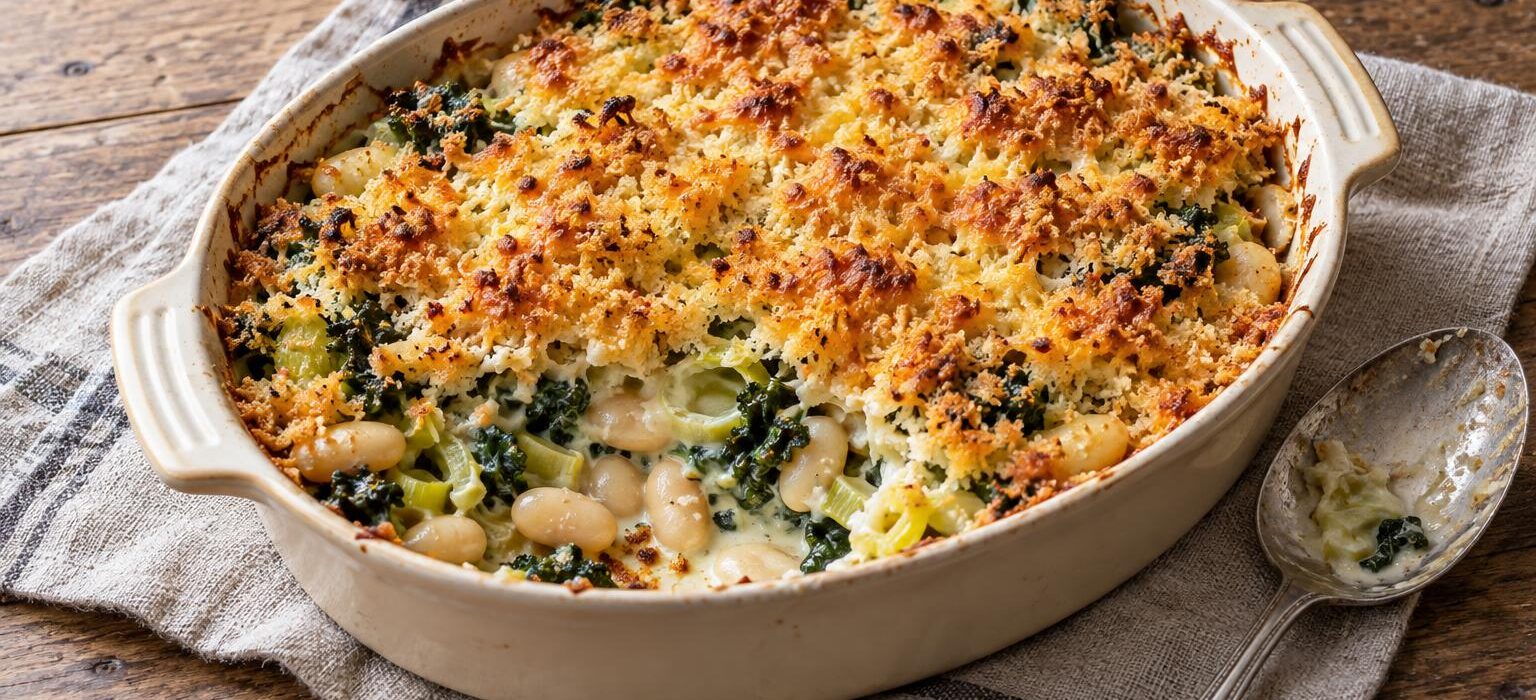
Some evenings call for a bubbling dish in the middle of the table, not a sink full of pans. This leek, kale and butter bean gratin brings soft, sweet leeks and hearty beans together under a crisp Cheddar topping. A little mustard keeps the creamy sauce lively, while the kale gives each spoonful a welcome bit of bite.
It is a straightforward meat-free supper for four, with 15 minutes of preparation and around 30 minutes of cooking. The sauce starts on the hob, then the hot filling goes into a shallow dish for a short spell in the oven. There is no separate saucepan of white sauce to juggle.
Why it suits October
Leeks and kale are lovely choices for a British autumn supper: both appear in Good Food’s October seasonal guide. Look for British-grown produce when shopping, as origin and availability vary. The butter beans are a storecupboard helper rather than a claim about the British harvest, making the seasonal greens into a satisfying main dish.
A few ingredient pointers
Weigh the leeks after trimming and the kale after removing the tough stalks. Leeks can hide grit between their layers, so split them lengthways and rinse thoroughly before slicing. Shred the kale fairly finely: big, tough pieces will not soften as quickly in the sauce.
Two standard 400 g tins of butter beans usually provide about 480 g once drained, but check the label and weigh what you have. Cannellini beans are a useful alternative at the same drained weight. Mature Cheddar supplies plenty of flavour without needing a mountain of cheese; choose one labelled vegetarian, along with vegetarian stock, if that matters for your table.
How to get a golden top and a creamy middle
Give the leeks their full time over a gentle heat. You want them soft and sweet, not browned at the edges. Stir the flour through the vegetables, then add the milk gradually so the sauce stays smooth. Fold the beans in gently rather than stirring vigorously, which can break them up.
Use a shallow, roughly 2-litre dish and transfer the filling while it is hot. A deep dish takes longer to heat through and can leave the crumbs too dark before the middle is ready. Fresh coarse breadcrumbs give a more open, craggy topping than very fine dried crumbs. Tossing them with a little oil helps them colour evenly. The oven timing is a guide: look for bubbling edges, golden crumbs and a piping-hot centre.
What to serve alongside
A crisp green salad with a sharp dressing balances the rich sauce nicely. Steamed carrots are a good choice for a warmer plate, and a little crusty bread is handy for the last bit of sauce. This is a main-course gratin rather than just a vegetable side.
Leftovers and making the most of them
Divide leftovers into shallow containers so they cool promptly, then refrigerate within 1–2 hours at 0–5°C. Eat within 48 hours and reheat only once, until piping hot all the way through. A splash of water loosens a thickened sauce; loosely cover the dish during reheating so the crumbs do not burn.
You can freeze cooled portions promptly for up to two months for best quality, although the topping will lose some crunch. Defrost fully in the fridge and use within 24 hours of defrosting. These cooling and storage principles follow the Food Standards Agency’s chilling and freezing guidance. For the crispest finish, make the gratin fresh and enjoy the leftovers as a softer, comforting lunch.
Leek, kale and butter bean gratin recipe

Sweet leeks, earthy kale and tender butter beans in a mustard-Cheddar sauce, finished with crisp golden crumbs. A comforting meat-free supper for an October evening.
- 15 ml rapeseed oil
- 350 g leeks trimmed weight, washed and thinly sliced
- 2 garlic cloves finely chopped
- 15 g plain flour
- 300 ml semi-skimmed milk
- 100 ml vegetable stock
- 15 g Dijon mustard
- 480 g tinned butter beans drained and rinsed (2 x 400 g tins before draining)
- 150 g kale tough stalks removed, leaves finely shredded
- 100 g mature Cheddar grated, divided
- 60 g fresh coarse breadcrumbs
- 10 ml rapeseed oil for the topping
- 1 g ground black pepper
- 1 g fine salt optional, to taste
-
Heat the oven to 220°C / 200°C fan / gas 7. Have a shallow 2-litre ovenproof dish and a large deep frying pan ready. Halve the leeks lengthways, rinse between the layers to remove grit, then slice thinly. Prepare and weigh the other ingredients before starting to cook.
-
Heat 15 ml rapeseed oil in the frying pan over a medium-low heat. Add the leeks and cook for 8 minutes, stirring regularly, until soft but not browned. Add the garlic and cook for 1 minute.
-
Stir in the flour and cook for 1 minute. Gradually pour in the milk, stirring well after each addition, then add the stock and mustard. Bring to a gentle simmer and stir for 2 minutes until lightly thickened.
-
Fold in the drained butter beans and shredded kale. Cook for 3 minutes, stirring, until the kale has wilted and the beans are hot. Remove from the heat and stir in 60 g of the Cheddar and the black pepper. Taste before adding any of the optional salt; the stock and cheese may provide enough.
-
Spoon the hot mixture into the ovenproof dish. Toss the breadcrumbs with the remaining 40 g Cheddar and 10 ml oil, then scatter evenly over the top. Bake on the upper-middle shelf for 15 minutes, until golden and bubbling at the edges. If necessary, give it a few extra minutes: the centre should be piping hot.
-
Serve straight away, taking care with the hot dish, with a crisp green salad or steamed carrots. The 30-minute cooking time includes the hob and oven stages; allow extra time if your hob or oven needs it.
Use vegetarian Cheddar and vegetarian stock if serving vegetarians. Contains milk, wheat (gluten) and mustard; check stock labels for other allergens. Drain the beans before weighing: you need 480 g drained beans, not 480 g including liquid. Use a shallow dish so the hot filling heats through before the crumbs over-brown.
Cool leftovers promptly in shallow containers and refrigerate within 1–2 hours at 0–5°C. Eat within 48 hours. Reheat only once until piping hot throughout; add a splash of water if the sauce has thickened and loosely cover to protect the topping. Freeze cooled portions promptly for up to 2 months for best quality; the topping will soften. Defrost completely in the fridge, use within 24 hours of defrosting and reheat as above. Cooking times are a guide, not a substitute for checking that the centre is hot.