
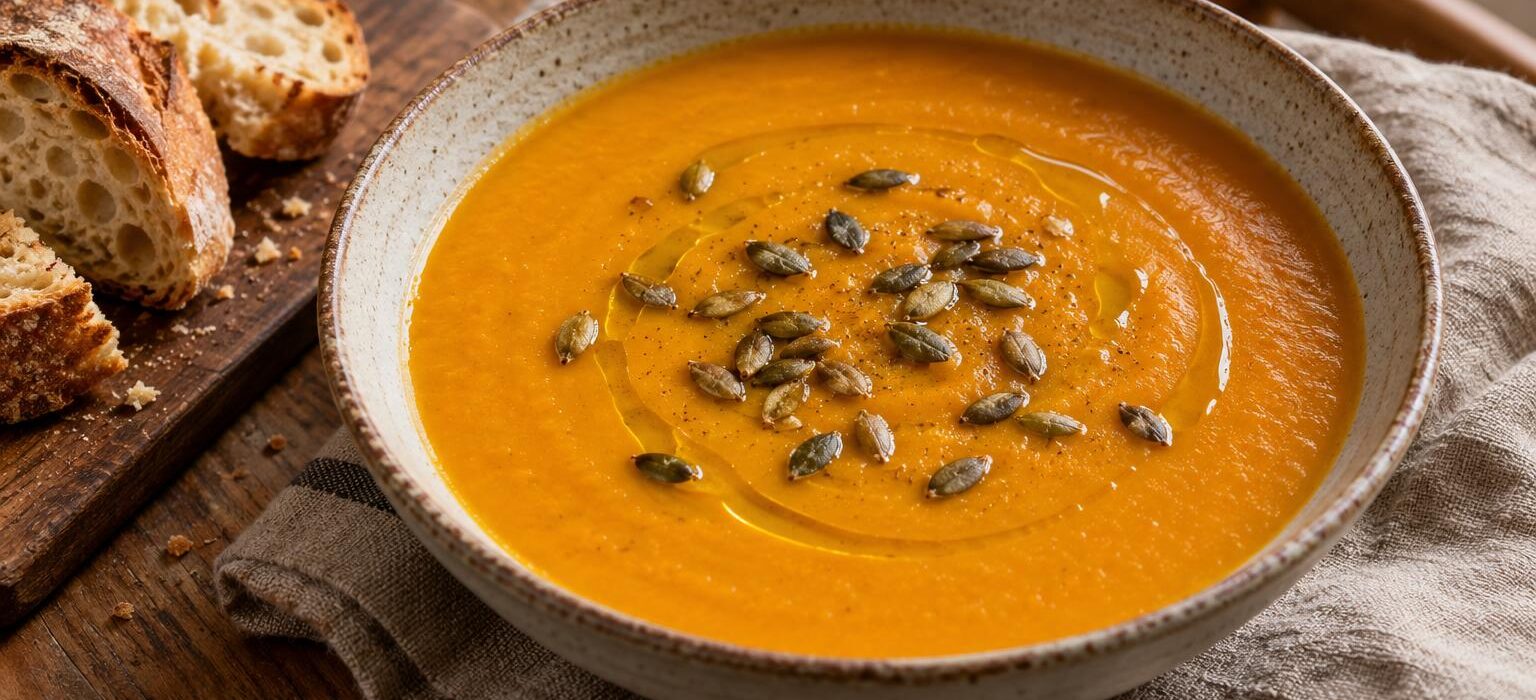
Roasted Pumpkin and Red Lentil Soup is what happens when an autumn vegetable meets a properly useful storecupboard ingredient. The pumpkin brings sweetness and those darker, savoury edges from the roasting tin; the lentils give the soup body without a splash of cream. Cumin, coriander and a little smoked paprika keep things warm rather than fiery, while lemon at the end stops the whole bowl drifting into baby-food territory.
This is a generous lunch for four, with bread for dunking and toasted pumpkin seeds for crunch. Allow about an hour, including chopping: the oven and hob work at the same time, so you are not waiting for one pan to finish before starting another. The result should pour from a ladle in a thick ribbon, not stand to attention like orange cement.
Why Roasted Pumpkin and Red Lentil Soup belongs on the autumn table
October is an excellent moment to turn a pumpkin into dinner rather than a doorstep resident. Good Food’s pumpkin guide places the British season between October and December and recommends fruit that feels heavy for its size, with firm, sound skin. Check the country of origin if you want a British-grown pumpkin; an autumn display is not a guarantee of a local harvest.
Choose a culinary pumpkin with dense flesh, rather than buying purely on lantern potential. Large carving pumpkins can be watery and less richly flavoured. They are not automatically unusable, but this soup is much easier to get right with a cooking variety. Butternut squash is a dependable substitute when pumpkin choice is limited. The red lentils, meanwhile, are the cupboard contingent: useful all year, not a claim about the British autumn harvest.
Choose the ingredients for flavour, not fuss
The recipe uses 800 g of pumpkin after peeling and removing the seeds and stringy centre. Buy roughly 1.1–1.3 kg to allow for waste, although the yield varies considerably. Prepared weight matters here: 800 g of whole pumpkin will leave you short of flesh and give the lentils rather too much of the spotlight.
Use split red lentils, not whole green or brown ones. They soften and break down as they cook, making the blended soup creamy without dairy. Pick them over for any debris and rinse in a sieve. They need no soaking for this method, but read the packet for any specific cooking directions and use tenderness, rather than the clock alone, as your final check.
Onion and garlic build a savoury base. Ground cumin adds earthy warmth, coriander brings a lighter aromatic note, and smoked paprika supplies a gentle smoky edge. Choose mild paprika unless you deliberately want heat. A lower-salt vegetable stock makes final seasoning easier to control; some stock cubes arrive with enough salt to audition for the sea.
Roast properly: space is an ingredient
Cut the prepared pumpkin into roughly 2–3 cm chunks so they cook at a similar rate. Use a stable chopping board with a damp cloth underneath and make a flat cut surface before tackling awkward pieces. Keep your free hand clear of the blade. If the skin is too tough to manage confidently, buy prepared chunks rather than turning lunch into an extreme sport.
Toss the pumpkin with two tablespoons of the measured oil and spread it in one layer. A crowded tin traps steam, which softens the pumpkin but does little for browning. Use two trays if necessary. Roast at 220°C, or 200°C fan, for 30–35 minutes, turning once. Look for browned corners and flesh that yields easily to a fork; pale, firm chunks need longer.
Put the lentils on while the pumpkin roasts. Soften the onion in the remaining tablespoon of oil, add garlic and spices briefly, then pour in the stock and add the rinsed lentils. Stir along the bottom occasionally as they simmer. Once they begin collapsing, they can settle and catch, particularly in a thin-based pan.
Blend safely and find the right consistency
When both components are tender, add the roasted pumpkin to the saucepan and scrape in any browned bits that lift easily from the tin. Avoid blackened pieces: bitterness is not the same thing as depth. Take the pan off the heat before blending with a stick blender, keeping the blade head submerged to avoid hot splashes.
A jug blender also works, but only if its manufacturer permits hot liquids. Let the soup cool as directed, blend in small batches and follow the instructions for venting steam. Never seal steaming soup into a personal smoothie blender. Return the blended soup to the pan and loosen gradually with hot water, starting with a small splash rather than committing the entire kettle.
Add the lemon juice after the lentils are soft, then taste for salt and pepper. You want brightness, not a noticeably lemony soup. If your pumpkin is especially sweet, a little more lemon can restore balance; if the stock is already assertive, you may need no extra salt at all.
The recipe

- 800 g culinary pumpkin peeled, deseeded and cut into 2–3 cm chunks; prepared weight
- 3 tbsp olive oil 45 ml, divided; plus a little to serve if desired
- 1 large onion about 200 g, finely chopped
- 3 garlic cloves finely chopped
- 2 tsp ground cumin
- 1 tsp ground coriander
- 0.5 tsp mild smoked paprika
- 150 g split red lentils picked over and rinsed
- 1.2 litres vegetable stock preferably lower-salt; check dietary and allergen labels
- 1 tbsp lemon juice 15 ml, plus more to taste
- salt and freshly ground black pepper to taste
- 30 g hulled pumpkin seeds to serve
- hot water as needed to adjust consistency
-
Preheat the oven to 220°C (200°C fan). Toss the prepared pumpkin with 2 tbsp (30 ml) of the oil. Spread in one layer on a large roasting tray, using two trays if crowded. Roast for 30–35 minutes, turning halfway, until browned at the edges and easily pierced with a fork. Allow longer if needed.
-
While the pumpkin roasts, heat the remaining 1 tbsp (15 ml) oil in a large saucepan over medium-low heat. Cook the onion for 8–10 minutes, stirring, until soft. Add the garlic, cumin, coriander and smoked paprika; stir for 1 minute without letting them burn.
-
Add the rinsed lentils and vegetable stock. Bring to the boil, then simmer gently for 20–25 minutes, partly covered, stirring along the bottom occasionally, until the lentils are completely soft and breaking down. Follow any specific packet instructions and add a splash of water if necessary.
-
Meanwhile, toast the pumpkin seeds in a dry frying pan over medium heat for 2–3 minutes, shaking frequently, until fragrant and beginning to pop. Transfer to a plate.
-
Add the tender roasted pumpkin to the lentils. Remove from the heat and blend with a stick blender, keeping the blade submerged. If using a jug blender, follow its hot-liquid safety instructions, cool as directed, work in small batches and vent steam; never use a sealed smoothie blender for hot soup.
-
Stir in the lemon juice. Add hot water a little at a time to reach a thick but pourable consistency. Return to the hob and heat until steaming hot throughout, stirring. Taste and season with salt, pepper and a little more lemon if needed.
-
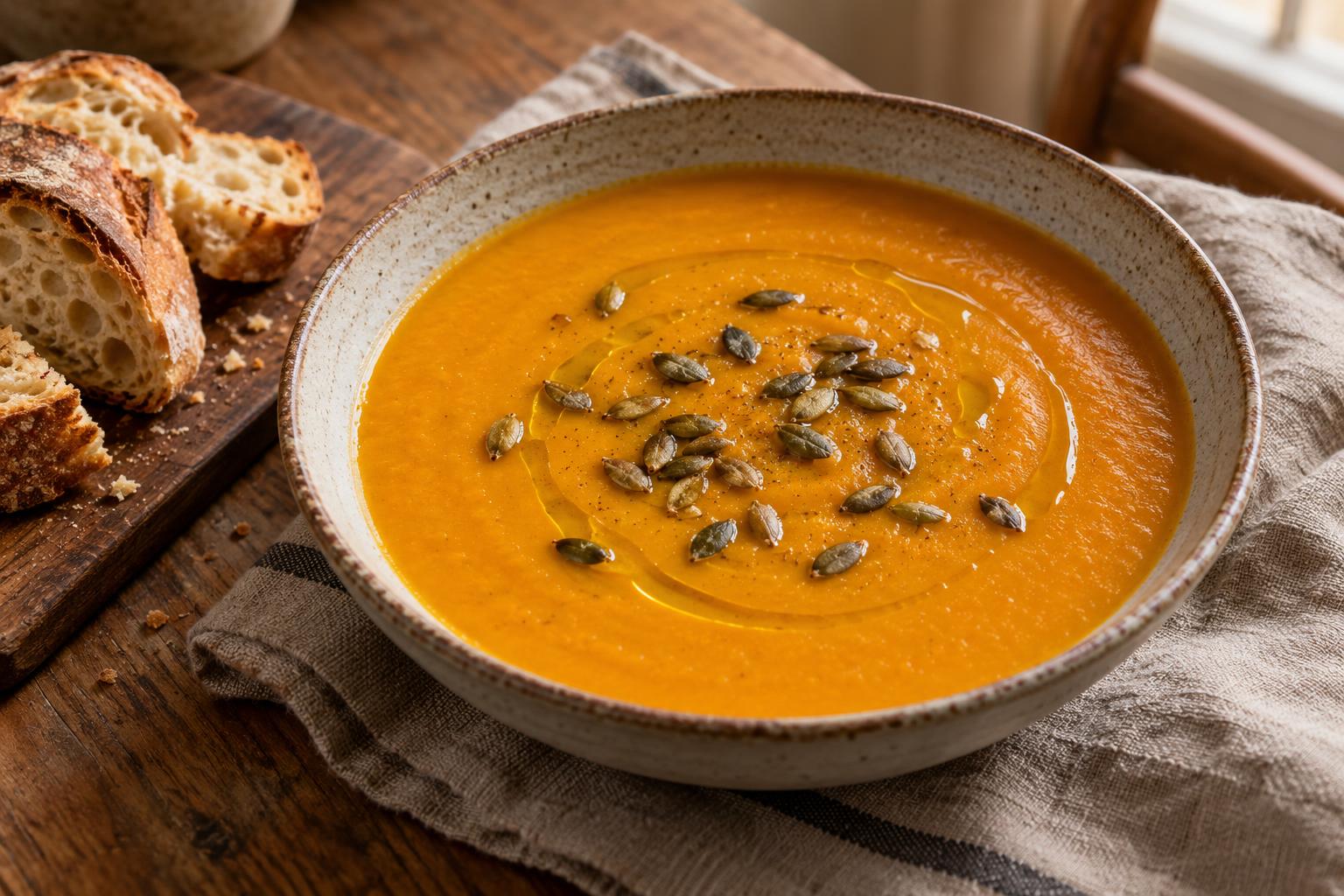
Divide between four bowls and finish with the toasted seeds and, if desired, a little olive oil. Serve with bread of your choice.
Timing assumes the lentils simmer while the pumpkin roasts; allow longer if either is not tender. Buy roughly 1.1–1.3 kg whole pumpkin for 800 g prepared flesh. Butternut squash can replace pumpkin at the same prepared weight. Use split red lentils, not whole green or brown lentils. Bread and extra serving oil are optional.
Cool in shallow containers and refrigerate within 2 hours at 5°C or below; eat within 48 hours. Freeze promptly for up to 3 months for best quality. Defrost in the fridge and use within 24 hours of full defrosting. Reheat once until steaming hot throughout, stirring and adding water as needed. Store seeds separately and add when serving.
Use vegan stock for a vegan soup and verified gluten-free stock and bread if required. Check stock labels for celery and other allergens. No nutrition values have been calculated.
Useful swaps and small finishing touches
Butternut squash can replace the pumpkin gram for gram at the prepared weight. Keep the pieces the same size and check tenderness during roasting. For a warmer finish, add a small pinch of chilli flakes with the spices. For a gentler bowl, omit the smoked paprika rather than removing all the seasoning; cumin and coriander still give the sweet vegetables some direction.
The base recipe is vegan when made with suitable vegetable stock. For gluten-free diners, check the stock and spice labels and serve gluten-free bread. Stock may contain celery or other allergens, so read the packaging rather than assuming that a vegetable-based dish suits everyone. Optional yoghurt changes the dairy status; it is not needed for creaminess.
Use hulled pumpkin seeds for the topping. Toast them in a dry frying pan over medium heat for two to three minutes, shaking frequently, until fragrant and beginning to pop. Tip them onto a plate promptly so residual heat does not scorch them. Add them at the table: stored in the soup, their lovely crunch quietly retires.
Serving it, and planning the next supper
Crusty bread turns this into a substantial lunch, while a sharp green salad gives a useful contrast to the smooth soup. For smaller starter portions, divide it between six bowls and keep the toppings modest. A little olive oil on each serving adds gloss; a deep oil slick merely makes the spoon slippery.
If you are building a week of autumn meat-free meals, our leek, kale and butter bean gratin with Cheddar crumbs takes the same seasonal-vegetables-plus-cupboard-pulses idea in a different direction. Save it for another evening when you fancy a crisp topping instead of a soup bowl.
Storage, reheating and rescuing a thick soup
Divide leftovers into shallow containers so they cool quickly, and refrigerate within two hours. Keep the fridge at 5°C or below and eat the soup within 48 hours. Alternatively, freeze cooled portions promptly for up to three months for best quality, leaving a little expansion space. Label the containers: orange mystery tubs are surprisingly hard to identify in February.
Defrost in the fridge and use within 24 hours of full defrosting. Reheat only the portion you need, stirring frequently until steaming hot throughout, and reheat only once. Lentils continue to absorb liquid, so chilled soup usually needs a splash of water. Add it gradually while heating, then check the seasoning again. Too thin? Simmer uncovered briefly, stirring, until it suits your spoon. Finish with fresh seeds, bring out the bread and let the bowl do the comforting.